

As markets for apparel, footwear, bags, and lifestyle products continue to move toward greater personalization and differentiation, patches have become increasingly popular as versatile decorative components. PVC patches are particularly valued for their vivid colors, dimensional designs, and flexibility in product development. Understanding their basic definition provides a useful foundation for exploring their material characteristics, construction, and practical applications.
A PVC patch is generally a decorative component made primarily from polyvinyl chloride, commonly known as PVC. It is manufactured through processes such as molding, injection molding, liquid PVC molding, printing, or composite production, and is attached to the surface of apparel, footwear, bags, or other products using methods such as heat pressing, adhesive bonding, stitching, or other suitable attachment techniques.
From a structural perspective, a PVC patch typically consists of a decorative body and an attachment surface or backing. The decorative body carries the main graphics, lettering, logos, or three-dimensional elements and serves as the primary visual component. The backing or attachment area secures the patch to the target material. Depending on the product design, different attachment methods can be selected for textiles, leather, and other substrates.
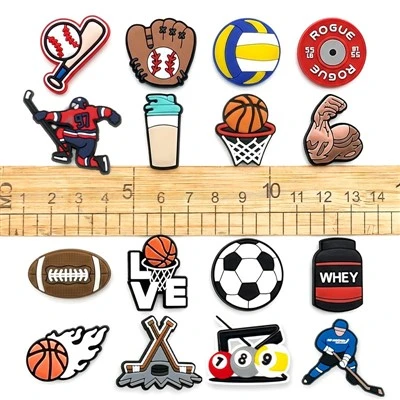
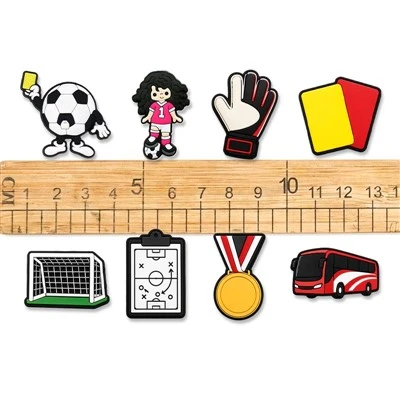
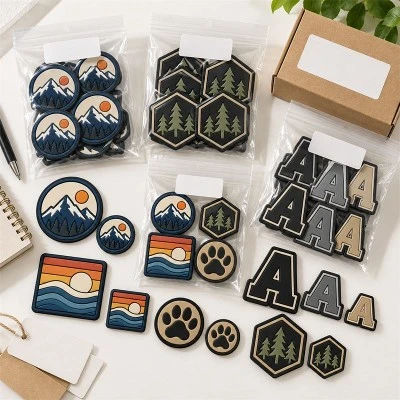
The molding properties of PVC provide designers with considerable creative freedom. Using suitable molds, manufacturers can produce flat graphics, embossed details, and three-dimensional forms with different levels of depth. Design elements may include brand logos, letters, numbers, cartoon characters, animals, plants, geometric patterns, and themed symbols, allowing PVC patches to complement a wide range of products and consumer preferences.
Color versatility is another important characteristic. Through material coloring, multi-color molding, and printing techniques, manufacturers can create distinctive combinations and layered visual effects. For businesses, incorporating signature brand colors and recognizable logos into PVC patches can turn these small accessories into extensions of the overall brand identity.
In practical applications, PVC patches are used not only for apparel but also for footwear, bags, hats, backpacks, and selected lifestyle products. Depending on the target market, manufacturers can develop collections inspired by sports, street fashion, children's themes, holidays, or brand collaborations.
The actual performance of a PVC patch can vary depending on its material formulation, thickness, flexibility, attachment method, and intended environment. Products designed for long-term use or frequent cleaning should receive particular attention to the durability of the connection between the patch and its underlying material.
Overall, a PVC patch can be defined as a decorative component made primarily from PVC, shaped through specialized manufacturing processes, and attached to the surface of a product to provide visual enhancement. Beyond decoration, it can also support brand recognition and personal expression. As demand for customized products continues to grow, PVC patches are expected to remain a versatile element in product design and visual branding.