

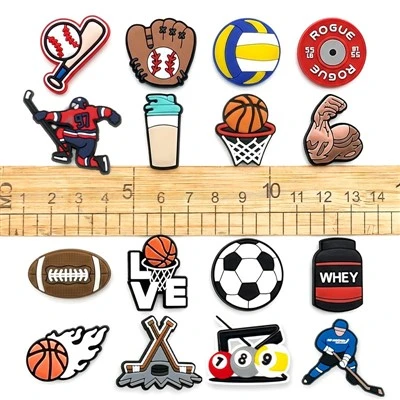
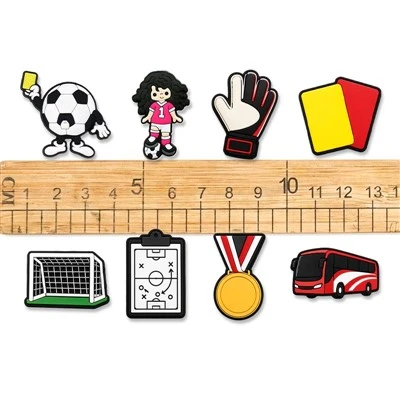
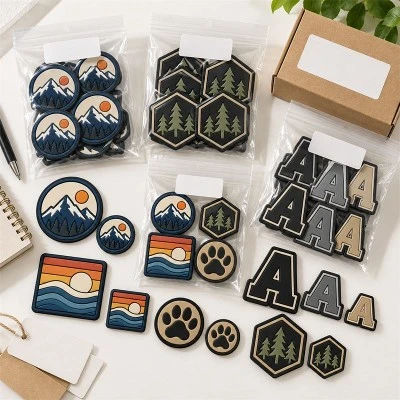
As markets for apparel, footwear, bags, and lifestyle products continue to move toward greater personalization and differentiation, PVC patches are taking on a broader range of functions. Their vivid colors, dimensional forms, flexible designs, and versatile attachment methods allow them to add visual detail while also supporting brand recognition, themed communication, and personalized styling.
Decoration remains the most fundamental function of PVC patches. By varying colors, graphics, dimensions, and three-dimensional structures, patches can transform the visual appearance of a product. Simple garments, shoes, or bags can be enhanced with distinctive PVC graphics that introduce greater depth and visual interest. Compared with conventional flat prints, raised PVC patches can create a more pronounced shape and give the product additional texture and dimension.
Brand recognition is another important function. Companies can incorporate brand names, logos, lettering, or signature graphics into PVC patch designs and apply them to apparel, footwear, hats, bags, and other products. Consistent use of brand colors, typography, and visual elements can make products easier to identify while creating a cohesive brand identity. For collaborative collections and limited-edition products, customized PVC patches can also become distinctive design features.
PVC patches are also effective tools for communicating themes. Designers can create collections around sports, street fashion, children's products, holidays, nature, or cultural concepts. A sports-inspired patch may use clean lettering and dynamic graphics, while children's products can feature animals, cartoon characters, or playful shapes. These visual elements help communicate the character and positioning of a product.
Personalized styling is another reason for the growing popularity of PVC patches. Some designs are detachable or interchangeable, allowing consumers to select different styles according to clothing colors, seasonal changes, or personal interests. Replacing a patch can give the same product a different appearance, increasing styling flexibility and extending its creative potential.
PVC patches can also support product differentiation and collection development. Brands can establish different graphics, colors, and dimensions for individual product lines, creating clear visual distinctions between collections. At the same time, a consistent design language can connect multiple products and create a stronger sense of cohesion across an entire collection.
The actual function of a PVC patch depends on its material, structure, attachment method, and intended application. Designers therefore need to consider dimensions, thickness, flexibility, and compatibility with the underlying material to ensure that the decorative effect aligns with practical requirements.
Overall, PVC patches have evolved beyond their traditional role as simple decorative components. They can now contribute to visual enhancement, brand recognition, thematic communication, personalized styling, and product differentiation. As consumers continue to value individuality and creative design, PVC patches are expected to play an increasingly versatile role in product development and brand communication.