

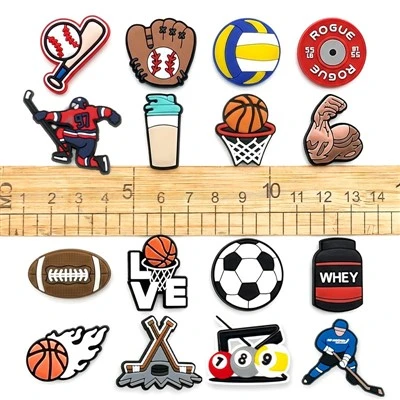
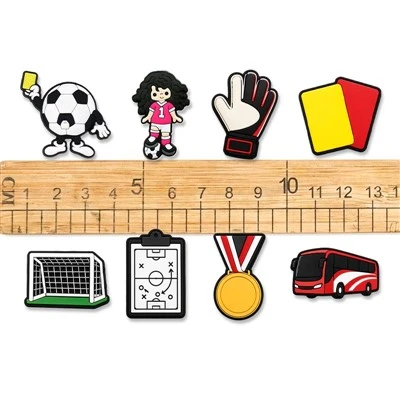
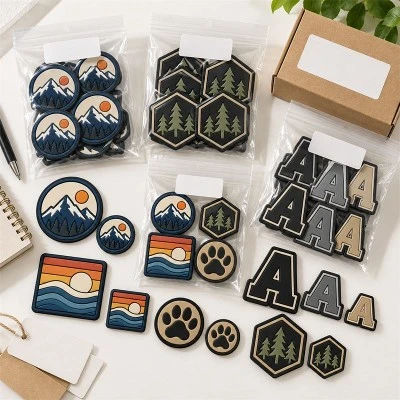
As apparel, footwear, bags, and personalized products place greater emphasis on visual details, PVC patches are becoming increasingly popular for their flexible construction and distinctive dimensional effects. Compared with conventional flat patches, PVC patches can use different thicknesses, layers, and attachment structures to create stronger three-dimensional appearances while allowing manufacturers to select suitable fastening methods for different applications.
A typical PVC patch consists of a decorative body and an attachment section. The decorative body provides the primary visual expression and can feature lettering, logos, graphics, numbers, or three-dimensional forms. The attachment section is generally located on the back or around the edge of the patch and is responsible for securing it to substrates such as fabric, footwear materials, or bag surfaces. Together, these elements allow the patch to serve both decorative and practical purposes.
Variation in thickness is one of the most recognizable structural characteristics of PVC patches. Through mold design, different areas can be given different heights and thicknesses, creating flat, embossed, or three-dimensional effects. Relatively flat structures can be used for logos and simple lettering, while raised sections can add depth and definition to cartoon characters, animals, and more detailed graphics.
Layered construction is another common feature. PVC structures with different colors or heights can be combined to create a clear visual hierarchy. Layering not only increases dimensionality but also separates complex graphics into distinct areas, making individual design elements easier to recognize. This approach is particularly useful for patches that incorporate multiple colors and graphic components.
Edge construction also affects the overall appearance of a PVC patch. Smooth and well-defined edges contribute to a cleaner finish and can help reduce visible deformation or roughness. Depending on the design concept, the edge profile can be customized to complement the overall shape of the apparel, footwear, or bag.
The attachment structure on the back is directly related to how the patch is installed. Depending on the application, the backing can be designed for heat pressing, adhesive bonding, or stitching. Some products may also incorporate specific surface textures or attachment zones to improve bonding with particular substrates. Designers need to consider material properties, patch thickness, and the expected usage environment when selecting the appropriate structure.
PVC patches also offer strong potential for modular product development. The decorative body can be changed according to different themes while maintaining a relatively consistent attachment structure. By modifying graphics, colors, and dimensions, manufacturers can develop multiple product variations more efficiently and provide brands with greater flexibility in collection development.
Overall, the structural characteristics of PVC patches include clearly defined decorative bodies, varied thicknesses, flexible layered construction, well-controlled edges, and diverse attachment options. As molding technology and manufacturing processes continue to advance, PVC patches are expected to become more refined, lightweight, and customizable, creating additional structural design possibilities for apparel, footwear, bags, and branded products.