

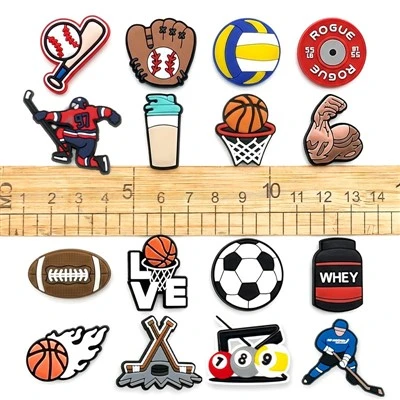
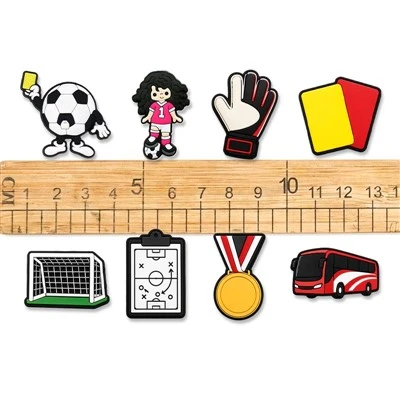
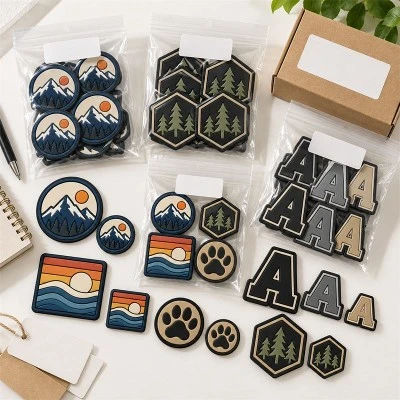
As demand for personalized products continues to grow across apparel, footwear, bags, and everyday goods, PVC patches have become increasingly popular as decorative components. Unlike traditional fabric patches, PVC patches are primarily made from polyvinyl chloride and produced through molding, printing, and surface-finishing processes. They can create distinctive three-dimensional effects and layered visual details, making them suitable not only for decoration but also for branding, themed designs, and customized products.
One of the defining characteristics of PVC patches is their strong shaping capability. PVC can be molded into letters, numbers, logos, graphics, and a wide range of three-dimensional forms. By adjusting thickness, contours, and surface textures, manufacturers can create flat, embossed, or raised designs with a distinctive visual presence.
A broad range of color options is another important feature. Different colors can be selected according to the design concept, while techniques such as multi-color molding and printing allow manufacturers to create more complex color combinations. For branded products, consistent use of signature colors can strengthen visual recognition. In apparel and footwear, contrasting colors, gradients, and themed palettes can add greater visual interest to the overall design.
PVC patches also offer considerable design flexibility. Designers can develop collections around different consumer groups and applications, including sports, street fashion, cartoons, holidays, nature-inspired themes, and brand-specific concepts. This flexibility supports both coordinated product collections and customized designs.
From a structural perspective, a PVC patch generally consists of a decorative body and an attachment surface or backing. Depending on the application, it can be attached through heat pressing, adhesive bonding, stitching, or other suitable methods. Different attachment techniques are appropriate for different substrates and usage conditions, so designers need to consider factors such as thickness, flexibility, attachment strength, and substrate characteristics.
PVC patches can also be relatively lightweight when appropriately designed. By controlling dimensions and material usage, manufacturers can achieve a strong decorative effect without adding unnecessary weight to apparel, footwear, or bags. For products intended for frequent or long-term use, thoughtful structural design can also contribute to a better overall user experience.
It is important to note that the actual performance of a PVC patch depends on factors such as material formulation, manufacturing process, attachment method, and operating environment. Buyers and manufacturers should therefore evaluate dimensions, surface quality, attachment strength, and intended application according to the specific product requirements.
Overall, PVC patches are characterized by diverse shapes, vivid colors, dimensional effects, flexible designs, and broad application potential. As personalized consumption continues to expand, PVC patches are expected to play an increasingly important role in decoration, product differentiation, and visual branding across apparel, footwear, bags, and customized merchandise.