

As personalized footwear continues to gain popularity, PVC shoe accessories have become common decorative components in casual shoes, children's footwear, and customized styles. Unlike traditional permanently attached decorations, some PVC accessories are designed to be detachable and interchangeable. Their operating principle is relatively straightforward: the decorative body works together with an attachment structure to keep the accessory securely positioned on the footwear while enhancing its appearance through distinctive colors, graphics, and shapes.
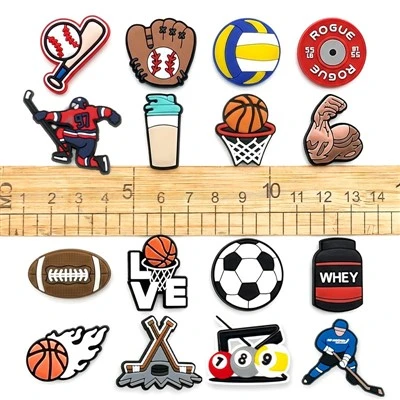
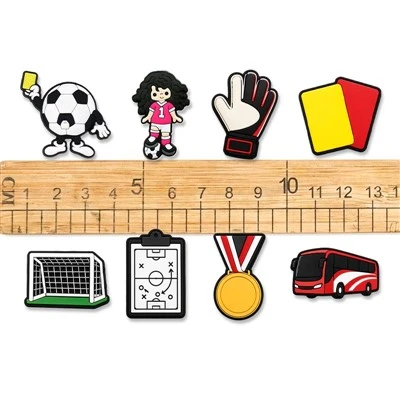
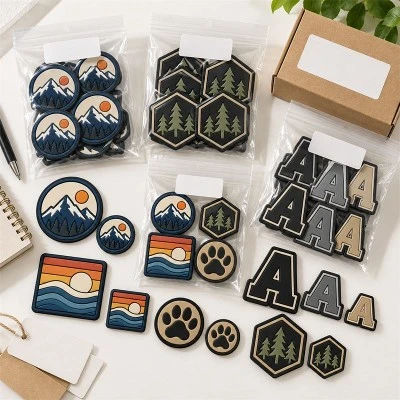
The decorative body is the visual core of a PVC shoe accessory. During manufacturing, PVC material is colored and molded into a wide range of flat graphics and three-dimensional forms. The decorative body may feature cartoon characters, letters, animals, plants, logos, or other visual elements. Once attached to the shoe, these details can become a focal point and contribute significantly to the overall style of the footwear.
The attachment structure provides the mechanical connection. Depending on the design, PVC accessories may use snap-fit systems, perforation-based attachments, insertion mechanisms, or similar structures. For example, some accessories are designed to pass through designated holes in the shoe. Once the connection component is inserted, it works together with the decorative body to keep the accessory in place. An effective attachment system needs to provide sufficient stability while remaining convenient to install and remove.
Interchangeable PVC accessories also provide a flexible styling mechanism. Consumers can select different designs according to their clothing, the season, personal interests, or a particular theme. By replacing one accessory with another, the same pair of shoes can take on a different visual identity. This ability to modify footwear without replacing the entire product is one reason PVC accessories have become popular in personalized fashion.
The forming characteristics of PVC provide an important foundation for this functionality. Through molding processes, manufacturers can create accessories with specific thicknesses, contours, and three-dimensional details. Multi-color molding and additional printing processes can also be used to create more sophisticated graphics and visual effects.
During everyday use, shoe accessories may be exposed to walking, bending, friction, and other routine forces. The attachment structure and material properties therefore need to work together effectively. Appropriate dimensions and secure connections can help reduce the likelihood of loosening or detachment while minimizing unnecessary stress on the footwear.
Overall, the working principle of PVC shoe accessories can be understood through three key elements: the decorative body provides visual expression, the attachment structure provides secure positioning, and the material and molding process provide the physical foundation of the product. By combining these elements effectively, PVC accessories can add flexible personalization to footwear without requiring major changes to the underlying shoe structure.