

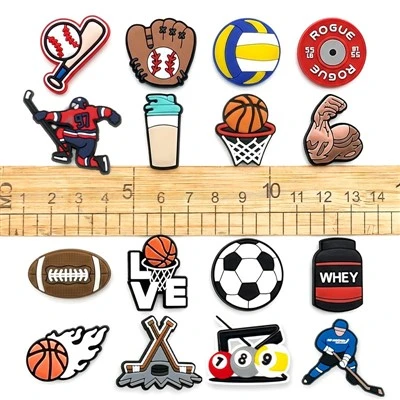
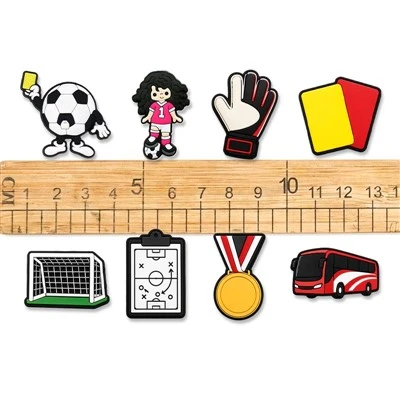
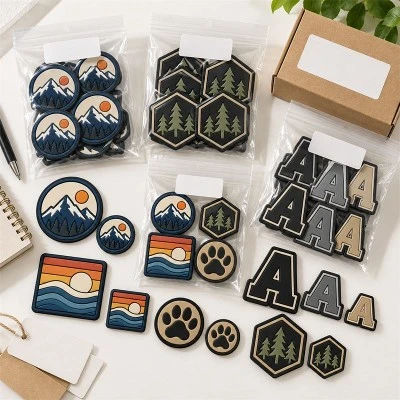
As footwear continues to evolve toward more personalized and fashion-oriented designs, PVC shoe accessories are becoming increasingly common because of their excellent molding capabilities and wide range of visual possibilities. Compared with traditional decorative components, PVC accessories offer considerable structural flexibility, allowing designers to create flat, three-dimensional, layered, and modular forms. Well-designed attachment structures can also improve stability and make the accessories better suited to everyday wear.
A typical PVC shoe accessory consists of a decorative body and an attachment component. The decorative body carries the main graphics, lettering, shapes, and colors, making it the central element of the accessory's visual identity. The attachment component connects the accessory to the shoe and may use different structures depending on the product, including snap-fit systems, perforations, or insertion-based connections. Combining these two elements effectively allows the accessory to remain visually attractive while providing practical usability.
Three-dimensional construction is one of the most distinctive structural characteristics of PVC accessories. PVC can be molded into designs with varying thicknesses and levels of depth, allowing designers to create layered visual effects. Differences in height, contours, and surface textures can give accessories greater dimension and character. Cartoon figures, animals, letters, and geometric patterns can all benefit from this type of construction.
Layered structures are also used in many PVC accessories. Different colors and shapes can be combined to create clearer visual hierarchy and stronger focal points. For accessories featuring intricate graphics, layered construction can help separate individual design elements while enhancing the overall appearance.
The attachment structure needs to balance secure positioning with ease of replacement. Detachable accessories should remain firmly attached during normal use while still allowing consumers to remove and replace them conveniently. For accessories intended to remain permanently attached, designers need to consider forces generated by pulling, friction, and repeated bending. Appropriate structural design can reduce the risk of loosening over time.
Lightweight construction is another important consideration. Because accessories are generally positioned on the upper of a shoe, overly complex or heavy structures may place unnecessary stress on the footwear. By optimizing the internal structure and eliminating unnecessary material, designers can reduce weight while maintaining the required shape and attachment strength.
PVC accessories also offer considerable potential for modular design. Different decorative bodies can be combined with compatible attachment systems, allowing manufacturers to develop multiple variations within the same product family. This approach can simplify product development while supporting customization and interchangeable styling.
Overall, the structural characteristics of PVC shoe accessories include flexible shapes, layered visual effects, versatile attachment systems, and lightweight construction. With continued advances in mold making and manufacturing technology, PVC accessory structures are expected to become more refined, functional, and customizable, creating additional opportunities for innovation in footwear design.