

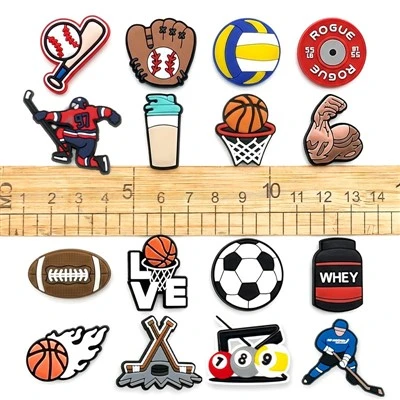
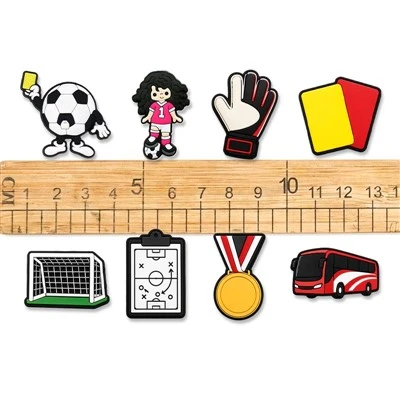
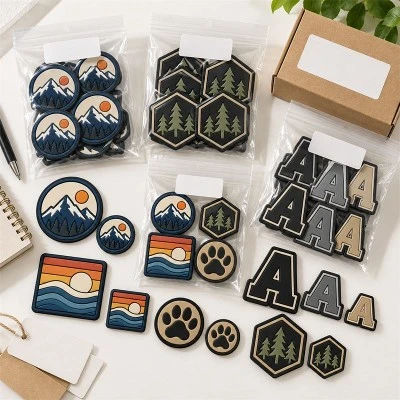
As the footwear industry becomes increasingly focused on personalization, fashion, and product quality, PVC shoe accessories are being widely used in casual footwear, everyday shoes, children's footwear, and customized styles. Their vibrant colors, versatile shapes, lightweight construction, and flexible processing options make PVC a practical material for decorative footwear components. At the same time, manufacturing processes are becoming more refined, with greater emphasis on consistency and production quality from initial design through final inspection.
Production typically begins with product design. Designers determine the dimensions, graphics, colors, and three-dimensional structure of each accessory according to the style of the footwear, attachment position, and intended use. For cartoon characters, lettering, logos, and intricate graphics, digital design tools can be used to refine small details and ensure that the concept can be accurately translated into a manufacturable product.
The next stage involves mold development. Mold precision has a direct impact on the dimensions and appearance of PVC accessories, so molds must be manufactured with careful attention to the product structure. Once a mold is completed, trial production and adjustments are usually carried out to verify graphic details, edge definition, and forming performance before full-scale manufacturing begins.
Material preparation is another important part of the process. Manufacturers select appropriate PVC materials based on the required appearance and performance characteristics, then prepare and blend the material according to the specified formulation and color requirements. Consistent material properties are essential because they can affect color, flexibility, and forming performance during production.
The forming stage creates the basic structure of the accessory. Prepared PVC material is introduced into the mold and processed under controlled heating and forming conditions. Depending on the product design and manufacturing requirements, techniques such as injection molding or liquid PVC molding may be used. Careful control of temperature, pressure, and processing time helps maintain clear contours and consistent dimensions.
After forming, the accessories are cooled, removed from the molds, and trimmed. Excess material around the edges is removed, while each piece is checked for deformation, incomplete filling, or visible surface defects. Products requiring multi-color effects, logos, or additional decorative details may then undergo printing and other finishing processes to achieve the desired appearance.
The final stage is quality inspection and packaging. Finished accessories are checked for color consistency, dimensions, graphic clarity, surface condition, and attachment structures. A well-established quality control process helps minimize batch-to-batch variation and ensures more consistent product performance.
Overall, PVC shoe accessory manufacturing has developed into an integrated process covering design, mold development, material preparation, forming, finishing, and quality inspection. As manufacturing equipment and production technologies continue to improve, PVC accessories are expected to become increasingly precise, standardized, and customizable, creating more opportunities for footwear brands to develop distinctive and innovative products.