

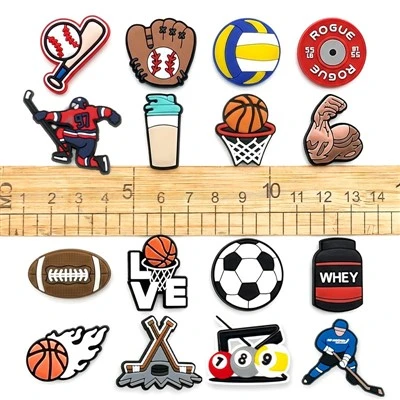
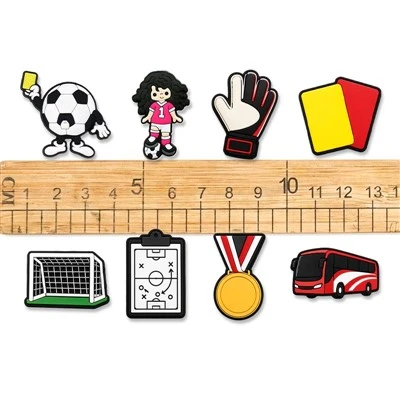
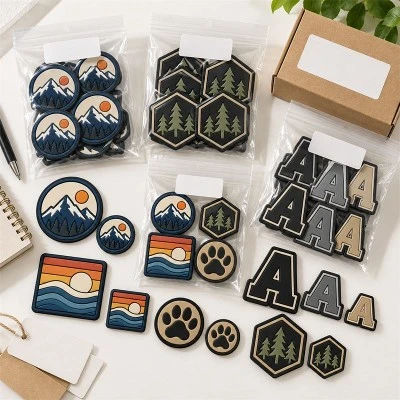
As the market for personalized footwear continues to grow, PVC shoe charms have become increasingly popular as design accessories thanks to their vibrant colors, flexible shapes, and lightweight construction. Producing a consistent, high-quality PVC shoe charm involves several stages, including product design, mold development, material preparation, forming, trimming, printing or surface finishing, assembly, and quality inspection. Each stage contributes to the final appearance, structural integrity, and performance of the product.
The process typically begins with product design. Designers determine the theme, dimensions, colors, and shape according to the footwear style, target consumers, and intended application. For cartoon graphics, lettering, and three-dimensional designs, special attention must be given to fine details and how they will translate into the final molded product. A practical design needs to be both visually appealing and suitable for manufacturing.
The next stage is mold development. The mold provides the foundation for forming the PVC accessory and must be manufactured according to the required dimensions and structure. Once completed, the mold is inspected and tested to ensure that graphic details, edges, contours, and dimensions meet the design specifications. A well-made mold helps maintain consistency across production batches.
PVC material preparation follows. Different colors and formulations can be selected according to the product design, and the materials are prepared and blended according to the manufacturing requirements. Consistent color and stable material properties are important because variations can directly affect the appearance and quality of the finished accessories.
Forming is one of the key stages of PVC shoe charm production. Prepared PVC material is introduced into the mold and processed under controlled heating and forming conditions to create the basic shape. Depending on the product design and manufacturing method, processes such as injection molding or liquid PVC molding may be used. After forming, the product is cooled and carefully removed from the mold to preserve its shape and fine details.
The molded pieces generally require additional trimming and finishing. Excess material is removed, edges are smoothed, and further processing may be carried out according to the design requirements. Printing, decorative finishing, and detailed color work may be added at this stage. Accessories featuring multiple colors or complex graphics may require additional alignment and precision finishing.
Quality inspection is performed after processing is complete. Inspectors typically check color consistency, dimensions, graphic clarity, surface condition, and attachment structures. For accessories intended to be mounted on footwear, the attachment points must also be checked for sufficient strength to reduce the risk of loosening or detachment during normal use.
Overall, PVC shoe charm manufacturing is an integrated process that combines creative design, material processing, precision molding, and quality control. With continued advances in mold technology, manufacturing equipment, and processing techniques, PVC accessory production is expected to become increasingly precise, consistent, and customizable, providing footwear designers with more possibilities for product development and personalization.