

As personalized consumption and fashion-oriented design continue to evolve, PVC patches have developed from simple decorative accessories into widely used design elements for apparel, footwear, bags, and customized branded products. Thanks to the molding flexibility and strong color capabilities of PVC, patches can be produced in a wide range of structures, graphics, surface finishes, and attachment formats. Each type offers distinct visual and functional characteristics, giving designers more options for product development.
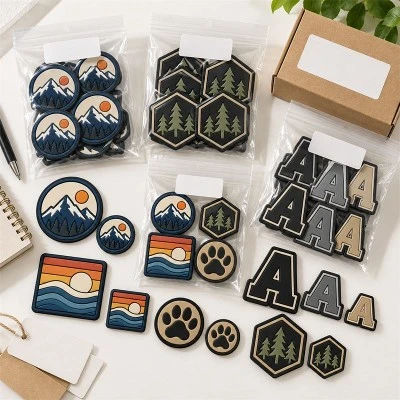
Flat PVC patches represent one of the most basic formats. Their thickness is generally uniform, with the design expressed primarily through colors, lines, lettering, and graphics. This format works particularly well for brand logos, letters, numbers, and clean graphic elements. Its straightforward appearance makes it suitable for apparel, hats, footwear, bags, and other products.
Three-dimensional PVC patches place greater emphasis on depth and visual impact. By adjusting the height, thickness, and contours of different areas through mold design, manufacturers can create raised or embossed effects. These patches are well suited to cartoon characters, animals, brand marks, and fashion graphics, allowing the design to stand out more prominently from the product surface.
Layered PVC patches combine structures with different heights, colors, or shapes to create greater visual depth. By arranging multiple levels within a single design, manufacturers can represent more complex graphics and create stronger visual hierarchy. This construction is particularly useful when the design contains details that need to remain clearly distinguishable.
PVC patches can also be categorized according to their color treatment. Single-color patches provide a clean and focused appearance and are often suitable for logos and basic visual elements. Multi-color patches use several shades to create contrasting sections, gradients, or other graphic effects, making them particularly suitable for fashion collections, children's products, and themed designs.
Attachment method provides another way to classify PVC patches. Common formats include heat-applied, adhesive-backed, stitched, and combination designs. Heat-applied patches can be attached to selected fabrics through controlled heat and pressure, while adhesive-backed versions offer a convenient installation method. Stitched patches use thread to reinforce the connection and can be suitable for products that require additional mechanical support. The appropriate method should be selected according to the substrate and intended use.
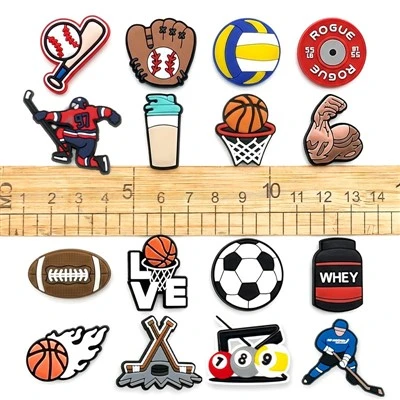
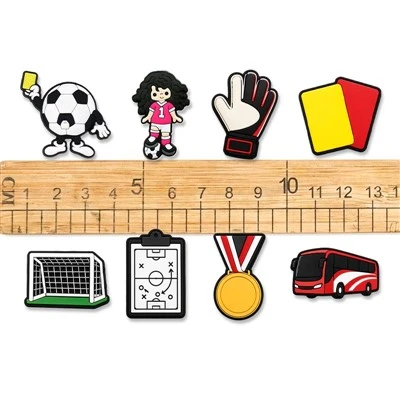
PVC patches can also be developed according to specific themes, including brand-logo patches, sports-inspired designs, children's collections, seasonal motifs, and collaborative or customized products. Theme-based designs allow manufacturers to address different consumer groups while helping brands build coordinated product collections.
Overall, PVC patches encompass a wide variety of formats, including flat, three-dimensional, layered, multi-color, and application-specific designs. As product development becomes increasingly personalized and detail-oriented, PVC patches are expected to move toward greater precision, customization, and design flexibility, creating more opportunities for visual expression across apparel, footwear, bags, and other consumer products.